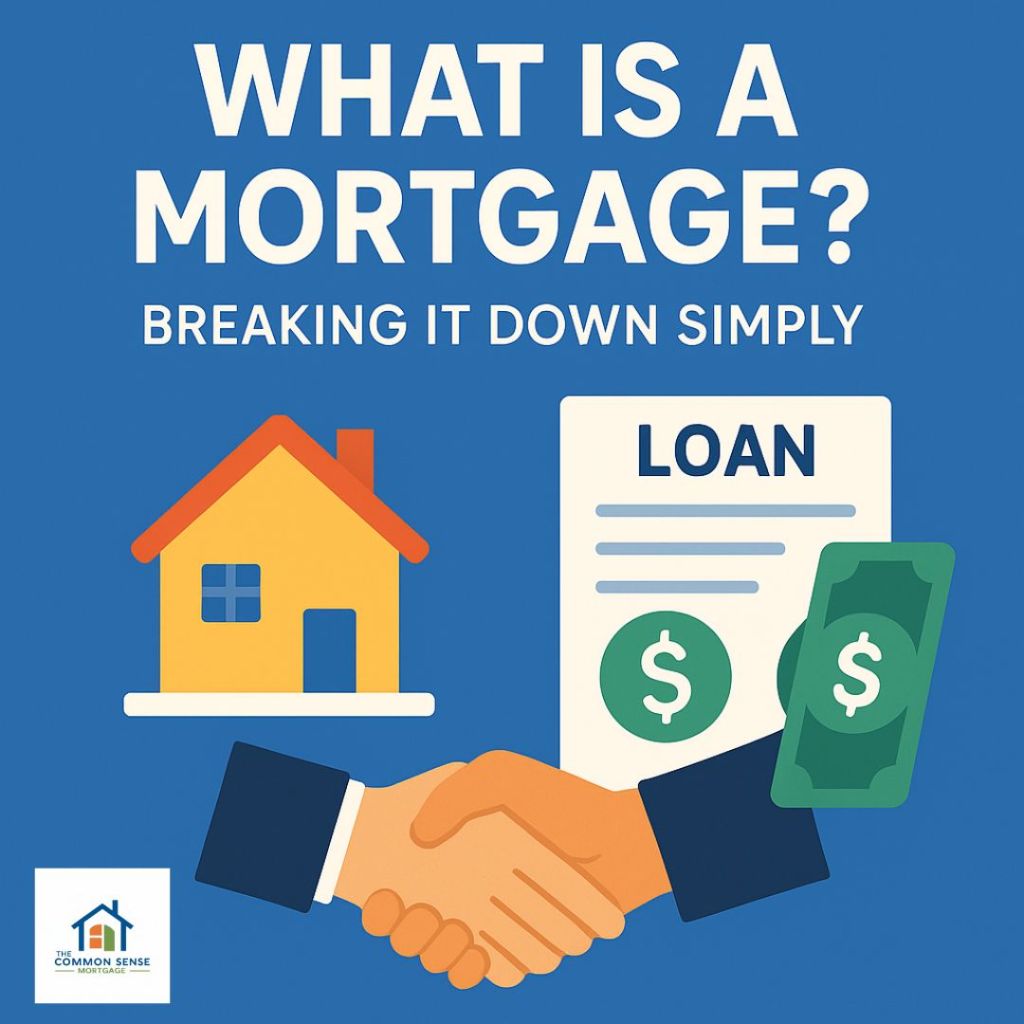
What is a Mortgage?
A mortgage is simply a loan you take out to buy a home. Instead of paying the full price upfront, you borrow money from a lender—like a bank or mortgage company—and agree to pay it back over time, usually with interest.
How Does It Work?
- Loan Amount: The total money you borrow.
- Down Payment: The money you pay upfront, which lowers the amount you need to borrow.
- Interest Rate: The cost of borrowing the money, expressed as a percentage.
- Loan Term: The length of time you have to pay back the loan (typically 15, 20, or 30 years).
- Monthly Payments: These usually include principal (paying down the loan), interest, taxes, and insurance.
Why Do People Get Mortgages?
Most people don’t have enough cash to buy a home outright, so mortgages make homeownership possible by spreading the cost over many years. Plus, owning a home can be a valuable investment and a source of stability.
Common Mortgage Types
You’ll hear about different loan types—like Conventional, FHA, VA, or USDA. Each has its own rules and benefits, which we’ll explore in later weeks.
Quick Tip:
Don’t be afraid to ask questions! Your mortgage professional is there to guide you through every step.
Disclaimer: The author of this blog is not a licensed mortgage originator. All information provided should be verified with a licensed lending professional. Information provided in blog posts by The Common Sense Mortgage are for educational purposes. All mortgage loans are subject to individual investor guidelines and underwriting approval.
 The Common Sense Mortgage
Leave a comment